

2026 Hyundai Kona or 2026 Hyundai Tucson Hybrid: Which Hyundai SUV Fits British Columbia Drivers?
2026 Hyundai Kona or 2026 Hyundai Tucson Hybrid: Which Hyundai SUV Fits British Columbia Drivers?
Posted on August 14, 2026
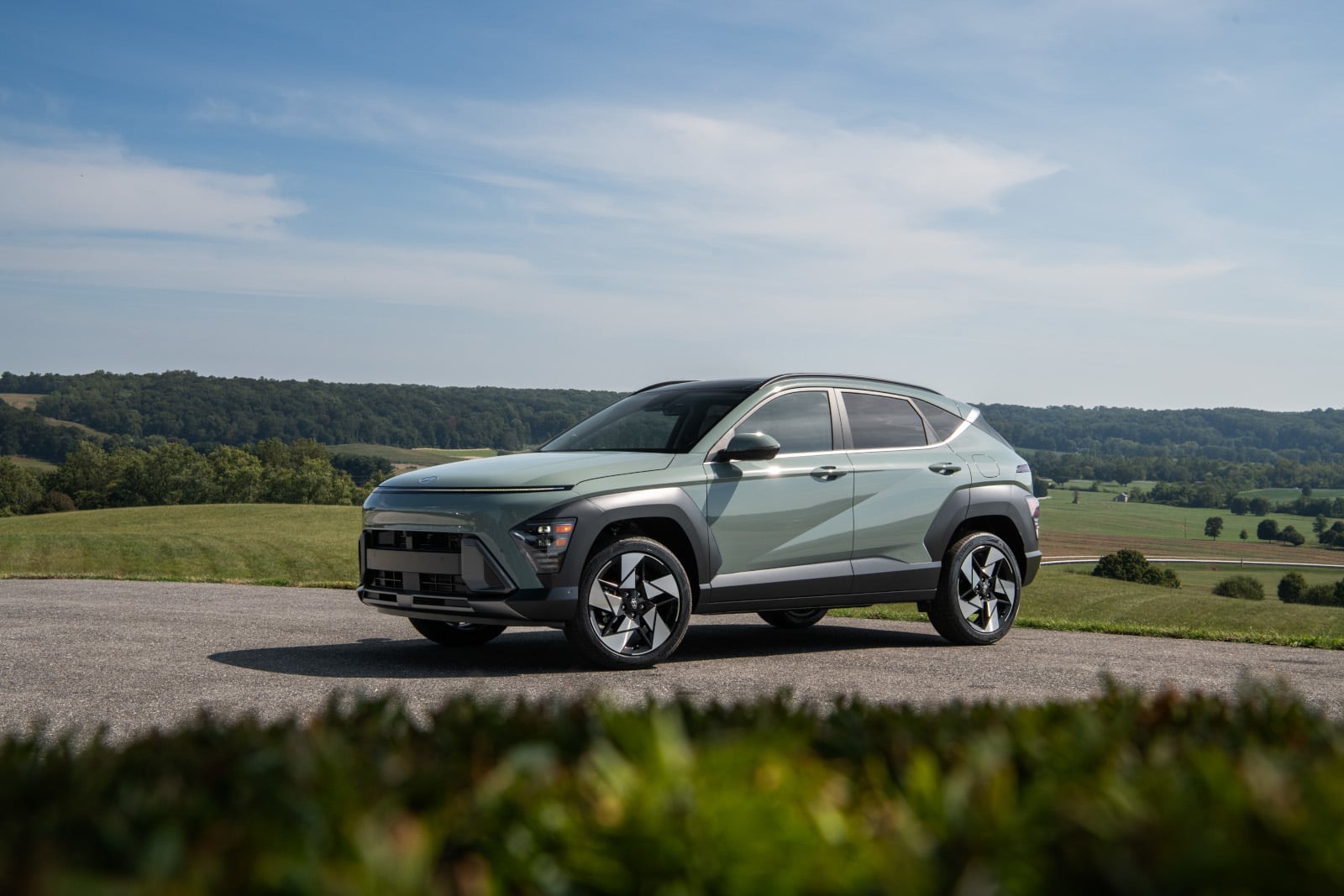
Choosing between the Kona and the Tucson Hybrid comes down to one question: how much vehicle does your week actually need? Both are efficient 2026 Hyundai SUVs, but they solve different problems for British Columbia drivers who split their time between tight parking and long highway stretches.
This comparison breaks down where each one earns its keep, from cargo room to fuel economy to the tech that makes wet-weather commutes easier.
Kona vs. Tucson Hybrid: Key Specifications
| What Matters | Kona | Tucson Hybrid |
| Segment | Subcompact crossover, 5 seats | Compact SUV, 5 seats |
| Standard drivetrain | FWD standard on Essential and Preferred (AWD optional); AWD standard from Preferred Sport up | HTRAC AWD standard on every trim |
| Available powertrains | 2.0 L I4 (147 hp / 132 lb-ft) or 1.6 L turbo I4 (190 hp / 195 lb-ft) | 2.5 L gas I4 (187 hp / 178 lb-ft), 1.6 L turbo hybrid (231 hp / 271 lb-ft combined), 1.6 L turbo plug-in hybrid (268 hp / 271 lb-ft combined, 51 km electric range) |
| Best combined fuel economy | 7.5 L/100 km (2.0 L FWD) | 6.7 L/100 km (1.6 L turbo hybrid) |
| Cargo volume (behind rear seats / seats folded) | 723 L / 1,803 L | 1,095-1,097 L / 2,108-2,119 L |
| Ground clearance | 170-210 mm, depending on trim | 210 mm |
| Fuel tank capacity | 47 L (2.0 L trims) / 50 L (N Line trims) | 42-54 L, depending on powertrain |
| Warranty | 5 yr/100,000 km powertrain, 3 yr/60,000 km comprehensive | 5 yr/100,000 km powertrain, 3 yr/60,000 km comprehensive |
Size, Cargo Room and Everyday Practicality
The Kona is built around a subcompact footprint. It holds 723 L behind the rear seats and 1,803 L with them folded down, enough for grocery runs, weekend gear, or a stroller without feeling like you’re driving something oversized on narrow streets.
The Tucson Hybrid works from a larger body. It offers 1,095-1,097 L behind the rear seats and 2,108-2,119 L with them folded, more room for car seats, sports equipment, or a full load of passenger bags.
If your trips are mostly solo commutes or errands close to home, the Kona’s smaller footprint threads through tight parking with less effort. If you’re regularly hauling gear for a full household or planning longer trips with passengers, the Tucson Hybrid’s larger cargo hold and cabin give you more room to work with.
Powertrain Choices and Fuel Efficiency
The Kona keeps things simple with two gas engines: a 2.0 L four-cylinder making 147 hp and 132 lb-ft on Essential, Preferred, and Preferred Trend, and a 1.6 L turbo four-cylinder making 190 hp and 195 lb-ft on Preferred Sport, N Line, and N Line Ultimate. Its most efficient configuration, the 2.0 L FWD trim, returns 7.5 L/100 km combined.
The Tucson Hybrid spreads across three powertrains. The 2.5 L gas engine makes 187 hp and 178 lb-ft, returning 8.8 L/100 km combined. The 1.6 L turbo hybrid combines its gas engine with an electric motor for 231 hp and 271 lb-ft combined, and returns 6.7 L/100 km combined, better than the Kona’s most efficient trim despite moving a larger vehicle.
The plug-in version steps up to 268 hp combined and adds 51 km of electric-only range from a 13.8 kWh battery, charged through a 7.2 kW onboard charger.
Drivers who want straightforward gas ownership without ever plugging in can lean on the Kona’s engine lineup. Drivers logging longer commutes who want to cut fuel stops without stepping down in size can look to the Tucson Hybrid, especially the plug-in variant if a home charger is part of the routine.
Traction, Driver-Assist Tech and Comfort Features
Every Tucson Hybrid trim comes with HTRAC AWD standard, no upgrade needed. The Kona also offers HTRAC AWD, but it’s optional on Essential and Preferred and only becomes standard from Preferred Sport up. Both lineups share core Hyundai SmartSense features across their full trim ranges, including Blind-Spot Collision-Avoidance Warning, Lane Following Assist, Lane Keeping Assist, Rear Cross-Traffic Collision-Avoidance Assist, and High Beam Assist, useful in rain, traffic, and highway driving alike.
Higher trims change the ownership experience in specific ways. The Kona N Line Ultimate adds:
- Highway Driving Assist
- Surround View Monitor and Blind View Monitor
- Remote Smart Parking Assist
- A 12.3-inch display with built-in navigation
The Tucson Ultimate answers with its own top-trim additions, including a head-up display, driver’s memory seat, and ventilated front seats, features aimed at long-haul comfort rather than tight-space manoeuvring.
If parking assistance and a fully loaded tech suite in a smaller package matter most, the Kona N Line Ultimate delivers that. If comfort features built for longer stretches behind the wheel matter more, the Tucson Ultimate is built around that instead.
Which Hyundai Fits Your Drive?
A single commuter or a smaller household doing most of their driving around town gets more out of the Kona. Its smaller footprint, optional-to-standard AWD, and efficient base engine suit shorter trips and tighter parking without asking for more vehicle than the routine calls for.
A larger household, or anyone regularly hauling passengers, gear, or covering longer commutes, gets more out of the Tucson Hybrid. Its bigger cargo hold, standard AWD, and hybrid efficiency serve trips where space and fuel savings both matter.
Commute pattern, household size, and how much cargo you move on a normal week are the factors that settle it, not one model being better than the other.
Test Drive the Kona or Tucson Hybrid
The Kona and Tucson Hybrid represent two different answers to efficient SUV ownership: one built around agility and a smaller footprint, the other around space and electrified efficiency. Both share Hyundai’s core safety technology and warranty coverage.
Visit Northland Hyundai in Prince George to compare the Kona and Tucson Hybrid in person and find the one that matches your daily routine.