

2026 Hyundai Sonata Hybrid vs 2026 Toyota Camry Hybrid: 10 Differences That Make Sonata Stand Out in British Columbia
2026 Hyundai Sonata Hybrid vs 2026 Toyota Camry Hybrid: 10 Differences That Make Sonata Stand Out in British Columbia
Posted on July 8, 2026
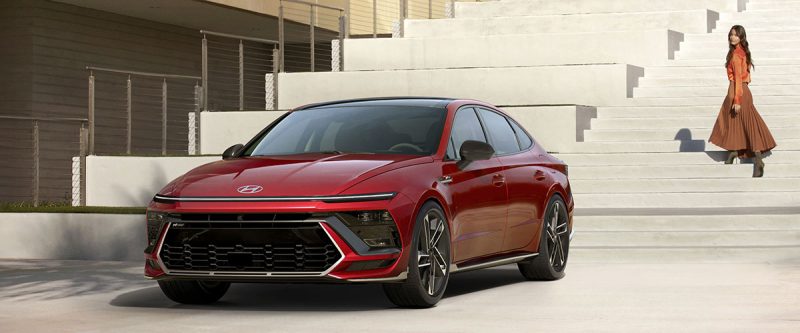
Choosing between two midsize hybrid sedans usually comes down to details, not headlines. If you’re cross-shopping the Sonata Hybrid and the Camry Hybrid in British Columbia, the differences show up in the cabin, the screen, the trunk, and how each car actually drives on a wet highway commute.
Here are 10 grounded differences to help you decide, starting with a side-by-side look at the numbers.
Sonata Hybrid vs. Camry Hybrid at a Glance
| Spec | Sonata Hybrid (Preferred Trend HEV) | Camry Hybrid (SE FWD) |
| Trunk cargo capacity | 441 L | 428 L |
| Seat upholstery | Leather, standard | SofTex/fabric |
| Touchscreen display | 12.3-inch, standard | 8-inch |
| Highway fuel economy | 4.6 L/100 km | 5.0 L/100 km |
| City fuel economy | 5.3 L/100 km | 5.0 L/100 km |
| Combined fuel economy | 5.0 L/100 km | 5.0 L/100 km |
| Horsepower | 192 hp combined | 225 hp |
| Digital gauge cluster | 4.2-inch | 7-inch |
| Rear legroom | 885 mm | 965 mm |
| Drivetrain availability | FWD only | FWD or AWD |
1. Exterior Design and Road Presence
The Sonata Hybrid rides on standard 17-inch alloy wheels, where the Camry Hybrid SE starts on 16-inch wheels. Both wear LED headlights and taillights, but the Sonata Hybrid adds chrome window surround mouldings and a panoramic sunroof standard across the lineup.
The Camry’s moonroof, by comparison, appears bundled into its SE Upgrade package rather than as base equipment. That gives the Sonata Hybrid a more finished look straight from its entry trim.
2. Cockpit Layout and Display Integration
The Sonata Hybrid’s dashboard centres on a 12.3-inch touchscreen paired with a 6.6-inch touch-enabled climate control panel below it, standard equipment on the Hybrid trim. The Camry SE’s 7-inch digital gauge cluster is sharper than the Sonata’s 4.2-inch driver display, a real point in the Camry’s favour.
But the Sonata Hybrid answers with a touchscreen more than 50 percent larger than the Camry SE’s 8-inch unit, giving the dash a more screen-forward feel where you actually look most.
3. Interior Materials and Cabin Atmosphere
Leather seating is standard on the Sonata Hybrid. The Camry SE ships with SofTex and fabric instead, with leather reserved for its XLE and XSE grades. The Sonata Hybrid also includes ventilated front seats and a power-adjustable passenger seat with driver’s memory settings.
The Camry SE’s passenger seat is 6-way manual, and its seat memory system only appears on XLE and XSE trims.
Standard on the Sonata Hybrid’s entry trim:
- Leather seating surfaces
- Ventilated front seats
- Power-adjustable passenger seat
- Driver’s Integrated Memory System
4. Rear-Seat Comfort and Space Trade-Offs
The Camry Hybrid’s rear seat has more stretch-out room, with 965 mm of rear legroom against the Sonata Hybrid’s 885 mm. That’s a genuine advantage for taller rear passengers on longer drives.
The Sonata Hybrid counters up front, where its 1,170 mm of front legroom and 975 mm of front headroom both beat the Camry’s 1,070 mm and 953 mm. Rear passengers in the Sonata Hybrid also get dedicated rear console ventilation ducts, a feature not confirmed on the Camry Hybrid.
5. Infotainment and Smartphone Connectivity
Wireless Android Auto and Apple CarPlay come standard on the Sonata Hybrid, running through that 12.3-inch touchscreen. Front and rear USB-C outlets are standard too, keeping devices charged on both rows.
The bigger touchscreen means map views, split-screen apps, and backup camera guidelines all render larger than on the Camry SE’s 8-inch unit, useful when merging in city traffic.
6. Wireless Charging, Connected Services, and Updates
The Camry Hybrid includes a wireless charging pad standard across every trim, including the base SE. On the Sonata Hybrid’s entry trim, wireless charging is reserved for the N Line Ultimate, so this one goes to the Camry.
While the Camry wins on the charging pad, the Sonata Hybrid comes standard with the BlueLink connected vehicle system and Over-the-Air software updates, so the infotainment and connected features can stay current without a dealer visit.
7. Hybrid Powertrain Character and Transmission Feel
The Sonata Hybrid pairs a 2.0-litre GDI hybrid engine with a 6-speed automatic transmission, complete with SHIFTRONIC manual shift mode and steering-mounted paddle shifters, for 192 combined horsepower. The Camry Hybrid SE FWD makes more power, 225 hp, from its 2.5-litre engine and eCVT.
The Camry’s extra output is real. But the Sonata Hybrid’s conventional-gear automatic delivers a more traditional shift feel, with defined steps instead of the constant-drone character an eCVT is known for.
8. Efficiency for City Commuting and Highway Cruising
In the city, the Camry Hybrid SE edges ahead at 5.0 L/100 km against the Sonata Hybrid’s 5.3 L/100 km. On the highway, that flips: the Sonata Hybrid returns 4.6 L/100 km compared to the Camry’s 5.0 L/100 km.
For a commute that mixes provincial highways with in-town errands, that highway advantage matters. Combined, both cars land at an identical 5.0 L/100 km, so the difference comes down to where you drive most.
9. Cargo Room and Everyday Storage
The Sonata Hybrid’s trunk holds 441 L, ahead of the Camry Hybrid’s 428 L. Both numbers reflect standard trunk capacity, so it’s an apples-to-apples comparison, and the Sonata Hybrid’s extra room adds up over a week of groceries and gear.
The Sonata Hybrid also includes a front passenger seatback storage pocket and a rear centre armrest with dual cupholders, useful spots for smaller items on daily runs.
10. Driver-Assist Coverage and Ownership Confidence
Both cars come well equipped for BC traffic. The Sonata Hybrid’s entry trim includes Forward Collision-Avoidance Assist with pedestrian, cyclist, and junction detection, Blind-Spot Collision-Avoidance Warning, Lane Following Assist, and Safe Exit Warning, all standard. The Camry SE also carries a strong base suite, including Pre-Collision System and Dynamic Radar Cruise Control.
Where the Camry SE falls short of its own XLE and XSE trims is in features like Panoramic View Monitor, Traffic Jam Assist, and a driver monitor camera, none of which appear at the SE level. The Sonata Hybrid’s comprehensive suite arrives on the base trim without that step-up.
The Camry Hybrid does offer AWD on its SE Upgrade, XLE, and XSE grades, a genuine option the Sonata Hybrid’s FWD-only Hybrid trim doesn’t match. But every Sonata Hybrid comes with a 5-year/100,000 km New Vehicle Warranty, 8 years/160,000 km of hybrid system coverage, and 5 years of unlimited-kilometre roadside assistance, built-in support for whatever a wet, unpredictable BC winter brings.
Why the Sonata Hybrid Fits British Columbia Drivers
Add up these differences and the Sonata Hybrid comes out ahead where it counts for everyday driving. Standard leather, ventilated seats, and a 12.3-inch touchscreen give the cabin a more finished feel than the Camry SE’s fabric seats and 8-inch display.
A larger 441 L trunk, a highway fuel economy edge for provincial commutes, and a driver-assist suite that doesn’t wait for a higher trim round out the case. Backed by an 8-year hybrid system warranty and 5 years of roadside assistance, the Sonata Hybrid gives British Columbia drivers more car and more confidence from the base trim up.
Test Drive the Sonata Hybrid in Prince George
The 2026 Sonata Hybrid pairs a 2.0-litre hybrid powertrain with a standard-leather interior, a 12.3-inch touchscreen, and a full suite of driver-assist features from its base trim, backed by Hyundai’s extended hybrid system warranty.
Visit Northland Hyundai in Prince George to see the Sonata Hybrid’s cabin and technology in person and find the right fit for your British Columbia drive.