

4 Ways the 2026 Hyundai Tucson Beats the Jeep Cherokee
4 Ways the 2026 Hyundai Tucson Beats the Jeep Cherokee
Posted on June 29, 2026
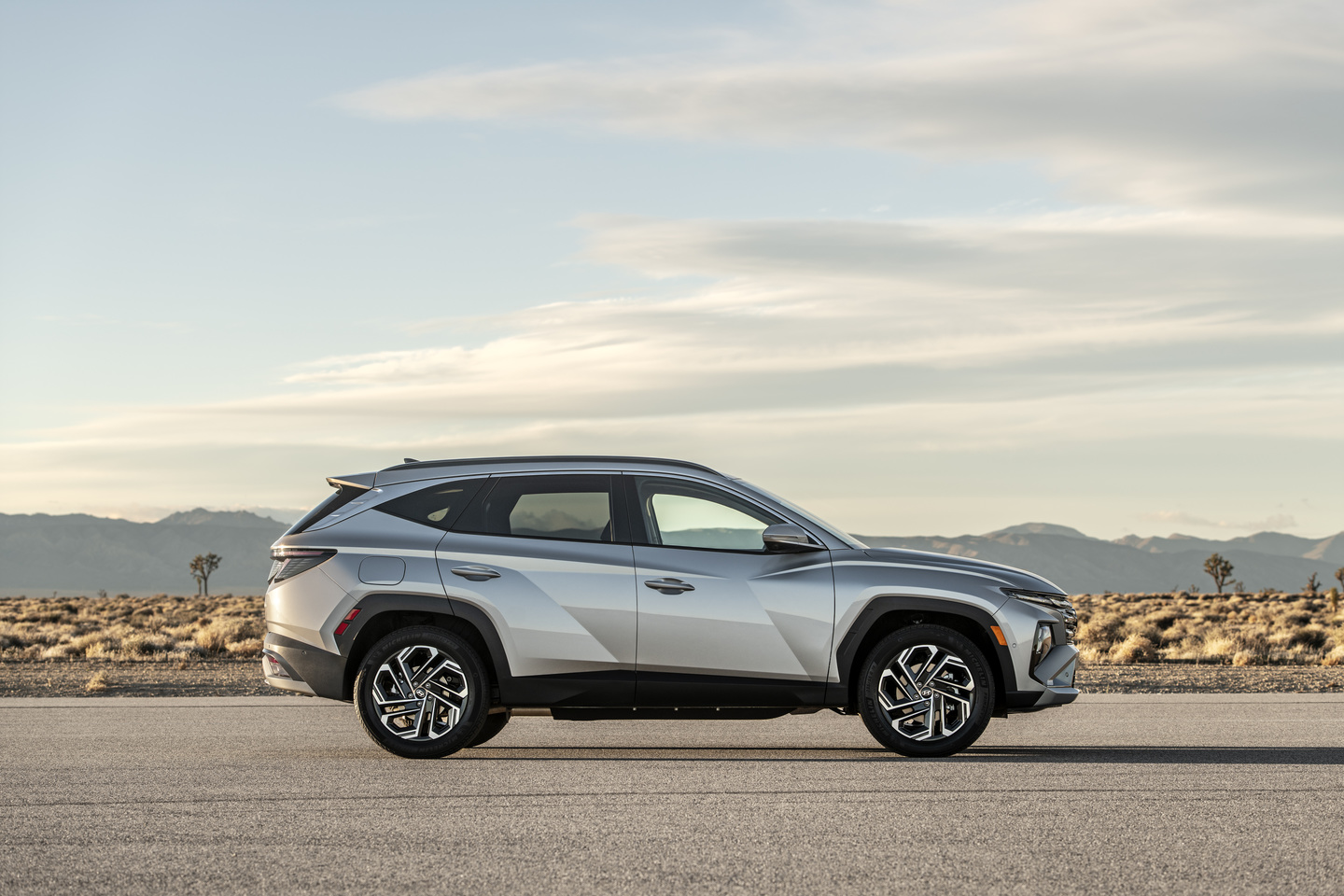
The 2026 Hyundai Tucson and 2026 Jeep Cherokee both arrive in British Columbia as hybrid-powered midsize SUVs with standard all-wheel traction. If you’re narrowing your shortlist to these two, the differences go well beyond the badge.
The Tucson brings three distinct powertrains, more cargo room, and higher combined system output. Here’s what those differences mean for your daily driving.
2026 Tucson vs. 2026 Cherokee: Key Numbers
| Spec | 2026 Tucson HEV | 2026 Cherokee |
| Combined system power | 231 hp | 210 hp |
| Combined system torque | 271 lb-ft | 230 lb-ft |
| Cargo behind 2nd row | 1,097 L | 952.1 L |
| Max cargo (seats folded) | 2,108 L | 1,935 L |
| Powertrain options | Gas, HEV, PHEV | HEV only |
| PHEV electric range | 51 km (Ultimate PHEV) | Not available |
| Drivetrain | AWD standard all trims | 4x4 standard all trims |
| Fuel economy combined | 6.7 L/100km | 6.3 L/100km |
| Ground clearance | 210 mm | 261.6 mm |
| Powertrain warranty | 5 yr / 100,000 km | 5 yr / 100,000 km |
Powertrain Output: A Clear Gap
The Cherokee’s 1.6L turbo hybrid system produces 210 hp and 230 lb-ft combined. That’s functional for daily use. The Tucson HEV uses its own 1.6L turbo hybrid to reach 231 hp and 271 lb-ft combined, a gain of 21 hp and 41 lb-ft of torque.
The Tucson PHEV on the Ultimate trim takes output to 268 hp combined, still at 271 lb-ft. The PHEV’s electric motor alone contributes 97 hp and 224 lb-ft. That 58 hp advantage over the Cherokee’s peak shows up on highway merges and mountain grade climbs.
The Cherokee does return a slightly lower combined fuel consumption at 6.3 L/100km versus the Tucson HEV’s 6.7 L/100km. The Tucson PHEV answers that directly. On gasoline alone, the PHEV uses 6.7 L/100km combined. Plug it in and that drops to 3.1 Le/100km, with 51 km of all-electric range. For drivers with shorter daily commutes, 51 km of electric driving means the gas engine rarely starts before the weekend.
Cargo Room
Behind the second row, the Tucson gas and HEV versions hold 1,095–1,097 L. The Cherokee holds 952.1 L in the same position. That’s roughly 145 extra litres in the Tucson.
Fold the rear seats and the Tucson gas and HEV versions open to 2,119 L and 2,108 L respectively. The Cherokee reaches 1,935 L. The Tucson PHEV trades some floor space to its 13.8 kWh battery pack, landing at 902 L behind the rear seats and 1,876 L total. If plug-in capability is a priority, that cargo trade-off is worth knowing before you decide.
Rear legroom tells a similar story. The Cherokee Laredo offers 977.9 mm in the second row. The Tucson gas and HEV trims provide 1,050 mm, a 72 mm difference that rear passengers actually notice on longer drives.
Three Powertrains vs. One
Every Cherokee buyer gets the same 1.6L turbo hybrid. It’s a capable setup, but there’s no choice involved.
The Tucson gives you an actual decision to make. The Preferred trim starts with a 2.5L naturally aspirated four-cylinder at 187 hp and 178 lb-ft, AWD included. The N Line moves to the 1.6L turbo hybrid at 231 hp combined. The Ultimate trim adds the PHEV option at 268 hp combined, with a 7.2 kW onboard charger and 51 km of electric range.
That structure means a Tucson buyer who prefers a simple gas-only experience can choose the Preferred. A buyer who wants to minimize fuel spending on short commutes can go straight to the PHEV Ultimate. The Cherokee doesn’t offer that flexibility at any trim.
Capability and Ground Clearance
The Cherokee’s Jeep Active Drive I 4x4 system is a fully disconnecting unit with Selec-Terrain modes covering Auto, Sport, Snow, and Sand/Mud. Its ground clearance is 261.6 mm, and the approach angle is 19.6 degrees with a 29.4-degree departure angle.
The Tucson’s HTRAC AWD runs standard across every trim with Snow, Mud, and Sand terrain modes. Its ground clearance is 210 mm. The Cherokee’s extra 51.6 mm of clearance does give it a genuine edge for rough tracks and serious off-road use. For paved roads, highway driving, and light gravel, the Tucson’s AWD handles British Columbia conditions without any caveats.
On towing, both vehicles rate 3,500 lbs (1,587 kg) when comparing the Tucson 2.5L gas trim to the Cherokee. The Tucson HEV and PHEV trims are rated lower at 2,000 lbs (907 kg). If towing at the full 3,500 lbs matters, the Tucson 2.5L Preferred matches the Cherokee there.
Which One Is Right for You?
The Cherokee suits buyers who want a purpose-built off-road pedigree, higher ground clearance for rough terrain, and a slightly lower fuel consumption number on the hybrid powertrain. Those are real advantages for a specific type of use.
For most British Columbia drivers, though, the Tucson’s case is stronger. It carries more cargo in gas and hybrid form, produces more combined power at every hybrid output level, and offers a plug-in option the Cherokee cannot match. AWD runs standard from the base Preferred trim through to the Ultimate PHEV, so there’s no upgrade required to get the drivetrain you need.
If your shortlist comes down to these two, the Tucson is the stronger daily driver for the way most buyers in this segment actually use a midsize SUV.
See the 2026 Tucson at Northland Hyundai
The 2026 Tucson lineup covers a wide range of buyers, from the 187 hp 2.5L gas Preferred to the 268 hp PHEV Ultimate, all with AWD standard and more cargo room than the Cherokee across comparable powertrains.
Visit Northland Hyundai in Prince George to explore the Tucson trims in person, compare powertrains side by side, and schedule a test drive in the one that fits your routine.