

Hyundai Tucson vs Kia Sportage: Which Compact SUV Fits Your Lifestyle?
Hyundai Tucson vs Kia Sportage: Which Compact SUV Fits Your Lifestyle?
Posted on February 27, 2026
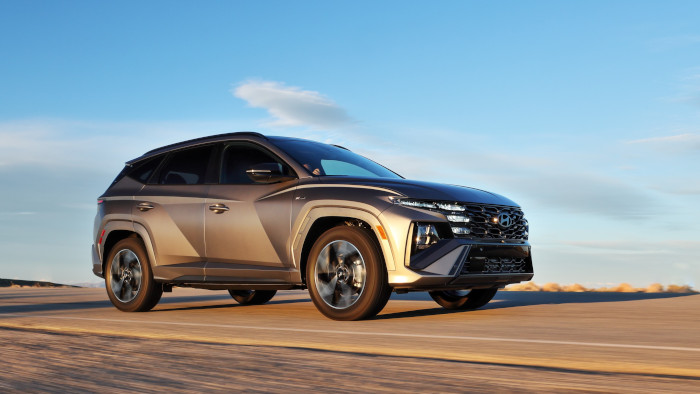
Shopping for a compact SUV means weighing practical considerations against personal preferences. The 2026 Hyundai Tucson and 2026 Kia Sportage represent two strong options in this segment, each offering distinct approaches to design, technology, and powertrain choice. Both vehicles share corporate DNA but deliver different experiences behind the wheel.
Powertrain Options and Performance
The Tucson offers three distinct powertrains across its lineup. The Preferred and Preferred with Trend Package trims feature a 2.5L GDI 4-cylinder engine producing 187 hp, paired with an 8-speed automatic transmission. The N Line Hybrid steps up with a 1.6L turbo hybrid system delivering 6.7 L/100 km combined fuel economy. The top trim adds a plug-in hybrid option with a 13.8 kWh battery and the same 6.7 L/100 km combined rating in hybrid mode.
The Sportage takes a similar multi-powertrain approach. Gasoline models (LX, X-Line, EX, and EX Premium) use a 2.5L GDI engine with an 8-speed automatic transmission. The HEV variants pair a 1.6L turbo with a 47.7 kW motor and 6-speed automatic, achieving 6.7 L/100 km combined. PHEV models use the same 1.6L turbo with a 72 kW motor, producing 268 hp.
| Feature | Tucson | Sportage |
| Base Engine | 187 hp (2.5L GDI) | 2.5L GDI (gasoline models) |
| Hybrid Fuel Economy | 6.7 L/100 km combined | 6.7 L/100 km combined |
| Transmission Options | 8-speed auto / 6-speed hybrid auto | 8-speed auto / 6-speed hybrid auto |
All Tucson trims come standard with HTRAC All-Wheel Drive and multi-terrain control modes for Snow, Mud, and Sand conditions. The Sportage offers both FWD and AWD configurations depending on trim, with its Active AWD system standard on X-Line Limited and all hybrid variants.
Interior Space and Cargo Capacity
Interior dimensions reveal practical differences between these two SUVs. The Tucson provides 1,019 mm of front headroom without a sunroof (968 mm with) and 1,002 mm in the second row (990 mm with sunroof). Front legroom measures 1,052 mm, matching the rear at 1,050 mm for the 2.5L models. The hybrid variants maintain the same front legroom but reduce rear legroom slightly to 1,004 mm in PHEV configuration.
The Sportage offers 1,006 mm of front headroom without a sunroof (959 mm with) and 1,000 mm in the rear (966 mm with sunroof). Both front and rear legroom measure 1,052 mm and 1,050 mm respectively, matching the Tucson's non-hybrid dimensions.
Cargo capacity shows more significant variation. The Tucson's 2.5L models provide 1,095 L behind the second row and 2,119 L with seats folded. The N Line Hybrid maintains similar capacity at 1,097 L and 2,108 L. The top PHEV reduces cargo space to 902 L behind the second row and 1,876 L maximum due to battery placement.
The Sportage delivers 1,036 L behind the second row (cargo floor high) or 1,121 L (cargo floor low). With seats folded, capacity reaches 1,962 L (floor high) or 2,098 L (floor low). This dual-height cargo floor provides flexibility for different loading scenarios.
Technology and Convenience Features
Both SUVs emphasize technology integration across their lineups. The Tucson Preferred starts with a 4.2-inch colour cluster display, upgrading to a 12.3-inch digital cluster on Preferred with Trend Package and higher trims. The N Line and top trims add a Bose Premium Audio system with 8 speakers, interior ambient lighting, and an auto-dimming rearview mirror with HomeLink. Panoramic sunroofs appear on all trims except the base Preferred.
The Sportage EX and higher trims include projection LED headlights, LED daytime running lights, and acoustic laminated windshield. Rain-sensing wipers, heated windshield, and power heated sideview mirrors enhance convenience. The SX trim adds advanced features like LED headlights with low beam assist, blind view monitor, surround view monitor, and remote smart parking assist.
Both vehicles use column-mounted electronic gear selectors. The Tucson's Shift-by-Wire system includes paddle shifters across all trims. The Sportage offers Electronic Parking Brake and Remote Start functionality on all models.
Safety Systems and Driver Assistance
Standard safety equipment includes 4-wheel anti-lock braking systems with electronic brake-force distribution on both vehicles. The Tucson features Electronic Parking Brake with Auto Vehicle Hold and Trailer Sway Assist as standard equipment. Front brakes measure 325×30 mm ventilated discs with 305×11 mm solid rear discs.
The Sportage includes Downhill Brake Control, Electronic Stability Control, Hill Assist Control, and Trailer Stability Assist across all trims. Front brakes measure 12.8 inches ventilated with 11.8-inch solid rear discs. The SX trim adds Highway Drive Assist 2, Forward Collision Avoidance Assist 2, parking collision avoidance assist for reverse, and parking distance warning for front, side, and rear.
Both vehicles include tire mobility kits rather than spare tires on most trims, reducing weight while maintaining emergency roadside capability.
Trim Structure and Pricing Strategy
The Tucson lineup consists of Preferred, Preferred with Trend Package, XRT, N Line Hybrid, top Hybrid, and top Plug-in Hybrid. Each trim level targets specific buyer priorities, from value-focused entry points to technology-rich flagship configurations.
The Sportage offers a broader trim range starting with LX FWD at $31,995, followed by LX AWD at $33,995, X-Line at $37,745, EX at $39,745, EX Premium at $41,745, and X-Line Limited at $45,245 for gasoline models. Pricing shown reflects the price at the time of writing. Final pricing may vary.
Hybrid variants include EX HEV at $41,245, EX Premium HEV at $44,245, and SX HEV at $47,745. Plug-in hybrid options start at $46,245 for EX PHEV, $49,245 for EX Premium PHEV, and $52,745 for SX PHEV.
Towing and Capability
Towing capacity varies by powertrain selection. The Sportage's 2.5L gasoline engine supports up to 2,500 lb when properly equipped with trailer brakes. Both HEV and PHEV variants reduce maximum towing capacity to 2,000 lb. The Sportage includes trailer lighting pre-wiring and Trailer Stability Assist across all trims.
The Tucson includes Trailer Sway Assist as standard safety equipment. Both vehicles include roof rails on select trims for additional cargo-carrying flexibility.
Design and Styling Differences
The Tucson N Line features exclusive styling elements including a distinctive front grille and fascia, 19-inch alloy wheels, rear spoiler, glossy-black side mirrors, and dual twin-tip exhaust. Interior appointments include sport seats with suede and leather surfaces, black cloth headliner, and deluxe metal door scuff plates.
The Sportage X-Line and X-Line Limited trims emphasize rugged styling with specific exterior treatments and SynTex synthetic leather-trimmed seats. The SX trim adds matte chrome and dark satin finish elements, LED headlights with 4-cube projection, and low beam assist.
Exterior colour selections differ between models, with the Sportage offering options like Snow White Pearl, Fusion Black, Heritage Blue, and Jungle Green. Interior choices include various quilted leather combinations in black, carmine red, and terracotta brown depending on trim selection.
Which SUV Matches Your Needs?
Choosing between the Tucson and Sportage depends on specific priorities. Drivers seeking maximum cargo flexibility with dual-height floor configurations may prefer the Sportage's versatile approach. Those prioritizing standard all-wheel drive across all configurations will find the Tucson's HTRAC system appealing.
Powertrain selection plays a significant role in the decision. Both vehicles offer consistent hybrid fuel economy at 6.7 L/100 km combined across HEV variants, simplifying efficiency comparisons. The Sportage's PHEV delivers higher output at 268 hp for drivers seeking maximum electrified performance.
Technology enthusiasts should compare specific feature availability across trim levels. The Tucson's earlier adoption of 12.3-inch digital cluster displays and Bose audio on mid-level trims contrasts with the Sportage's concentration of advanced driver assistance features on top SX variants.
Experience These SUVs at Northland Hyundai
Both the 2026 Hyundai Tucson and 2026 Kia Sportage deliver strong compact SUV experiences with distinct personalities. Visit Northland Hyundai to explore the Tucson lineup firsthand and explore which model best fits your driving needs.